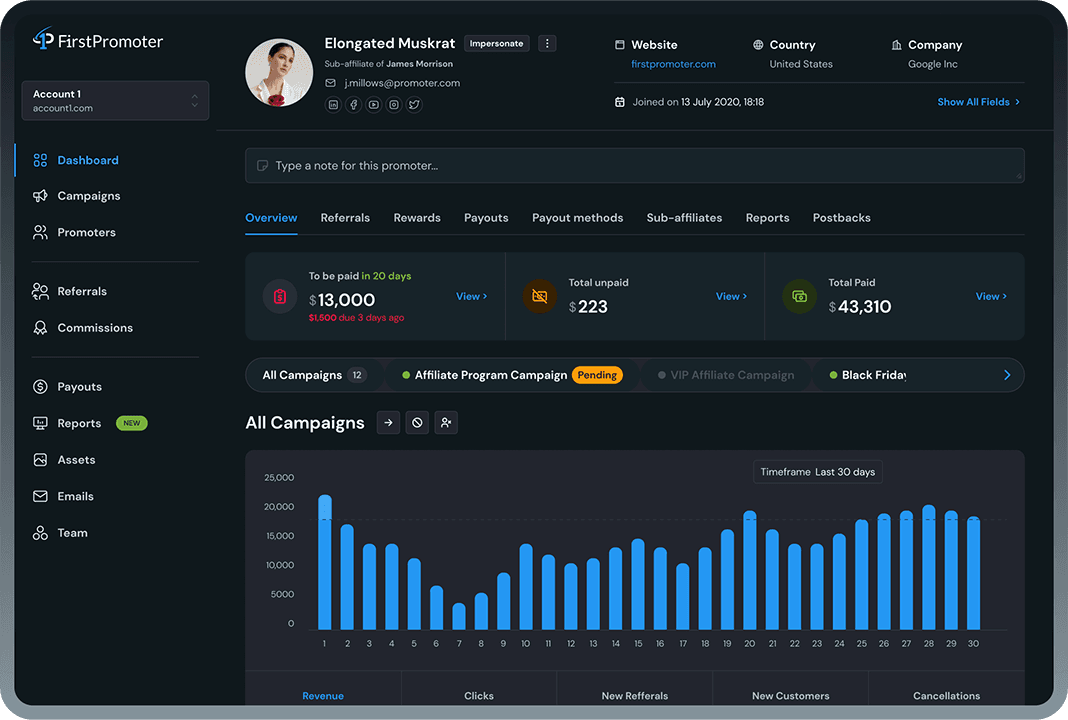
You can count on Black Friday fraud as much as on the profit. Lots of traffic, registrations and payments mean lots of fraudsters looking to take advantage. And Black Friday fraud is specific: it’s hard to spot because it sits between two reports that almost nobody reads side by side, the ad report and the affiliate report. The first shows clicks and spend, the second shows sales and the commissions they earned. An affiliate who bids on your brand name and then collects commission on a buyer who was already searching for you looks normal in both.
Key Takeaways
- Black Friday fraud sits between two reports. Your ad report shows clicks and spend and your affiliate report shows sales and commissions, so a partner bidding on your brand looks normal in both.
- Software brands get targeted too. In a Bfore.ai study of 605 US brands, affiliates bid on the brand terms of 31% of them.
- You can act against an affiliate bidding on your brand because they agreed to your program terms. You have little control over a competitor doing the same. Write brand bidding and coupon-site rules into your affiliate agreement before the season.
- After the click, watch for four patterns: coupon codes leaking to deal sites, self-referrals, refunds followed by rebuys and click spikes that don’t turn into signups.
- Check every morning of Black Friday week, while ads are still live and commissions still pending. Fraud you find in January is already paid for.
Black Friday makes that gap more expensive. Searches for your brand plus “code”, “discount” or “Black Friday” go up, more coupon codes circulate and more commissions get approved in a single week. Around Black Friday 2025, Imperva saw bot attacks on retail sites rise 50% above the November average, while retail traffic rose 37%.
This guide follows a Black Friday sale from the ad to the payout and lists what to check at each step: brand bidding before the click, then attribution and commissions after it.
Before the click: brand bidding
Brand bidding means running paid search ads on keywords that contain a brand name or its variations. You’re probably doing it already. The tricky part is that other brands can bid on it too and Black Friday gives them a good reason to do so. People searching “your brand + discount” or “your brand + Black Friday” have already picked you and it’s very likely they want to buy from you.
It’s not just a big e-commerce problem. Software brands are a target as well as online stores. A Bfore.ai study of Google Search ads for 605 US brands, software and marketing companies included, found affiliates bidding on 31% of them. Among e-commerce, technology and marketing companies, 45% to 65% saw at least one case. Each affected brand had about three such advertisers on average.
Competitors and partners need different responses
The advertiser on your brand term could come from a wider group than you expect: a competitor, a reseller, a comparison site or one of your own affiliates. What you should do is separate them early. You have little control over a competitor, but a partner is different, because they agreed to your program terms and you can identify them, document the breach and ask them to take the ads down.
But keep in mind that this difference only helps if your terms say something about brand bidding. If your affiliate agreement doesn’t name your brand keywords as off limits, add that before Black Friday traffic starts.
After the click: affiliate fraud patterns in SaaS
Once a visitor lands on your site, the risk moves to attribution: which partner gets credit for the sale and whether that credit is earned. In a SaaS program this matters for much longer than one order, because a recurring commission keeps paying out every month the customer stays. The four patterns described below are the ones Black Friday makes worse. For the full list, see our article about affiliate fraud.
- Coupon codes that leak to deal sites
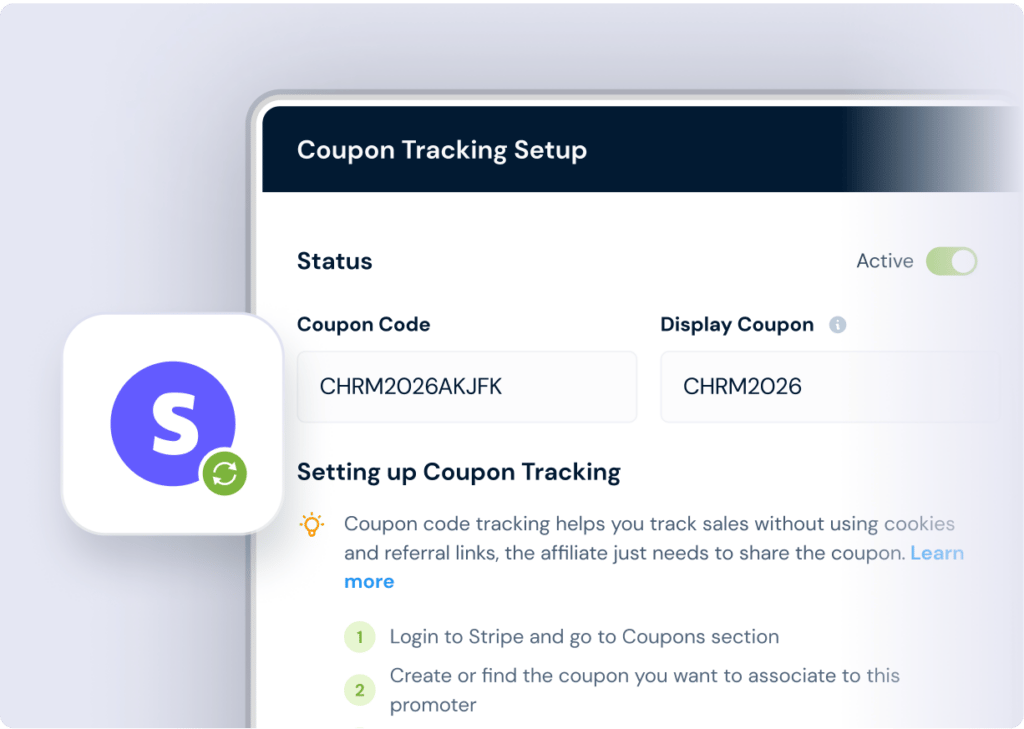
You give an affiliate a Black Friday code for their audience. Don’t be surprised if a week later it’s on three coupon sites and every buyer who finds it there is credited to that affiliate. Coupon tracking attributes a sale to the code’s owner even when there was no click, so a leaked code earns commission on traffic the affiliate never sent.
Here’s what to check: referrals from one code jumping while that affiliate’s link clicks stay flat. Search “[your brand] coupon” and “[your brand] Black Friday code” yourself and see whose codes come up. Also, give every affiliate their own code, so a leak points at one partner and you can replace that code without touching the rest. If you’re still launching your program for the season, you can set it up with a coupon code for every partner in 15 minutes.
- Self-referrals
Your Black Friday discount plus an affiliate commission is a good deal for someone who signs up through their own link. Some partners do this to get both, so watch for new referrals whose email or company matches the affiliate who referred them. FirstPromoter flags these when the referral’s email or sign-in IP matches the promoter’s.
- Refunds and rebuys
A customer buys at the Black Friday price, asks for a refund and buys again through an affiliate’s link or code. Or one affiliate sends buyers who refund within days. Compare each affiliate’s refund rate in December with the rest of their year. A partner whose refunds double over the season deserves a closer look before the next payout.
Remember to tie commissions to real billing events, to be sure that trials that churn cost you nothing. When a refund does come through, the commission should come back too. In FirstPromoter, refunds claw back automatically from the affiliate’s next unpaid payout.
- Click spikes from one source
When one affiliate’s clicks jump overnight with no matching rise in signups or paid conversions, it can mean a lot of things: bot traffic, a placement on a low-quality site or a partner testing paid ads. Affiliate traffic isn’t clean by default: in Opticks’ analysis of more than 2 billion ad clicks from January 2025 to March 2026, 9.09% of affiliate traffic was invalid. So check click-to-signup and signup-to-paid rates per affiliate every day of Black Friday week and compare them with that affiliate’s normal week.
Where ad fraud and affiliate fraud meet
These two kinds of fraud overlap in one place: a paid search ad that ends in an affiliate-tracked sale. An affiliate bids on “[your brand] Black Friday”, wins the top spot above your own ad and sends the buyer to your checkout through their link. You lose the click to the affiliate’s ad, then pay them a commission on a customer who was already looking for you.
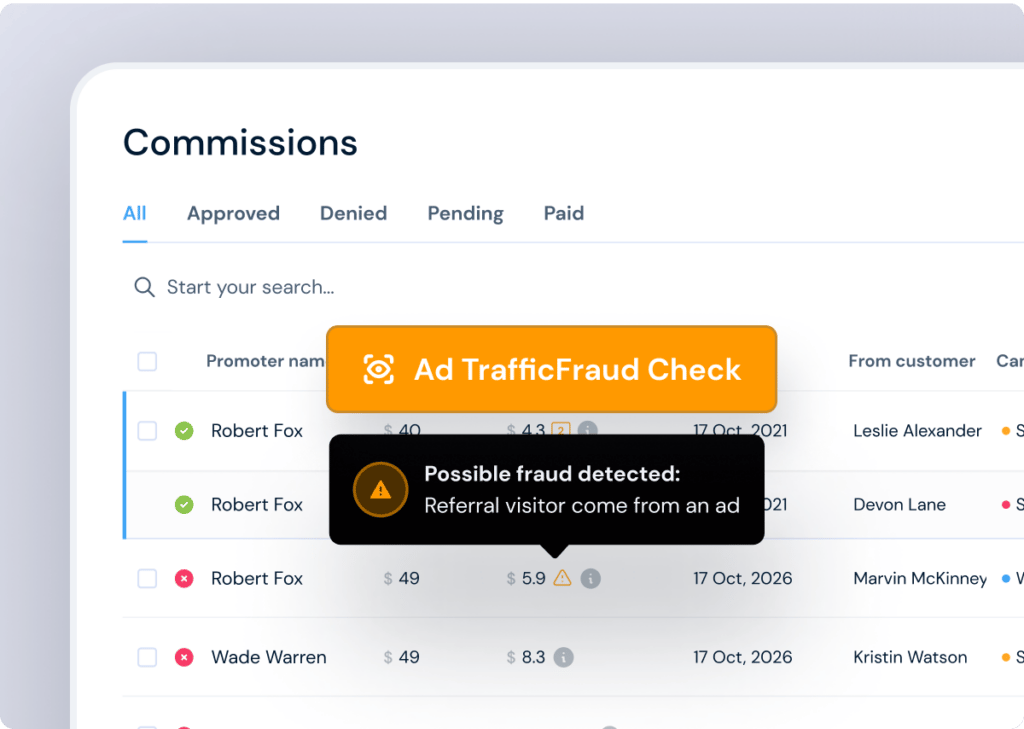
The good news is that you can act on it. To do so, your marketing and affiliate teams need to look at the same case, because each holds half the evidence. Marketing, or a brand monitoring tool, sees the ad: who ran it, on which keyword, in which country and what it promised. Your affiliate platform sees the referral and the commission it’s about to earn. With knowledge from both sides, you can get the ad removed, challenge the commission and send the affiliate a compliance notice.
In FirstPromoter, the second half shows up as paid-ad signals on the referral itself. Ad-traffic detection looks for 12 signals, such as a gclid parameter or utm_medium=cpc, and each campaign decides what happens next: track the referral, hold it as pending or block it. Put the ad screenshot next to the held referral and the conversation with the partner gets short.
If you want to hear a longer discussion of brand bidding and partner monitoring, watch the webinar on affiliate fraud and brand bidding.
Daily Black Friday fraud checks
If you start checking for fraud in January, it’s too late: by then, the fraud is already paid for. What saves you that cost is a short, simple check every morning of Black Friday week, while the ads are still live and the commissions are still pending. Stats in most affiliate platforms aren’t real-time, so a daily rhythm fits better than hourly refreshing.
What to check in your ads
- Who is advertising on your brand name and its variations (“brand + discount”, “brand + coupon”) in each of your key markets.
- Which advertisers or affiliate IDs are new since yesterday, and whether any ID is showing far more ads than before.
- What the ads promise: title, description and destination link. Look for misleading offers and for the value competitors lead with.
- Whether each advertiser is an authorized partner working within your program terms.
- Evidence while the ad is still live: screenshots, landing pages and redirect paths.
What to check in your affiliate program
- Referrals with paid-ad signals, held for review before they turn into payable commissions.
- Code-based referrals per affiliate compared with that affiliate’s link clicks, to spot leaked codes.
- New referrals whose email or company matches the referring affiliate.
- Click-to-signup and signup-to-paid rates per affiliate, compared with their normal week.
- Refunds per affiliate, so clawbacks land before the payout run.
Set these up before the season starts
If you only have time for one change on each side, make it these two:
- On the ad side, monitor brand bidding in your main sales markets. Start with the countries where you sell most and with the brand variations buyers use in November: your brand + “discount”, “coupon”, “code” and “voucher”. Monitoring gives you a record of each case, with the screenshots you’ll need when you contact a partner.
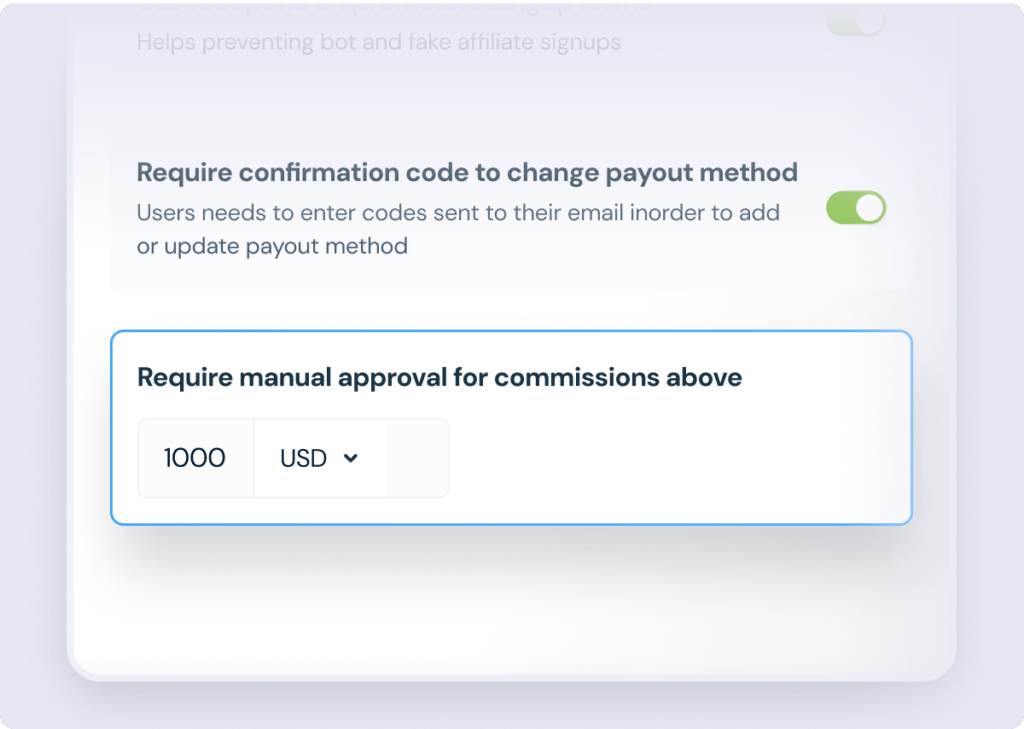
- On the affiliate side, hold referrals from paid ads as pending. A held referral still gets tracked, but a person reviews it before it becomes a payable commission. Just pair it with manual approval above an amount threshold, so the largest Black Friday commissions get a second look. Then write your brand-bidding and coupon-site rules into your affiliate terms, so a breach is something you can point to.
Tautvydas Vasiliauskas, Head of Marketing at FirstPromoter: “To this day, I still see affiliate programs that have no vetting process whatsoever. They basically just allow everyone in.”
Run your Black Friday partner program on FirstPromoter
Track links, coupon codes and direct URLs in one record, flag paid-ad referrals before they earn commission and claw back refunds automatically. Setup takes 15 minutes with no engineering, and your first month is 20% off.
In this article
Newsletter