Recruiting affiliates is a pipeline: find the right candidates, pitch them, vet who applies and give the ones you accept a program worth joining. Skip a step and you end up with a long affiliate list and almost nobody promoting. The best affiliates have options too, so recruitment is a two-way sell, not a mass blast.
Key Takeaways
- Recruitment is three jobs, not one: attract, qualify and convert into active partners.
- Your own site, email and existing customers are the highest-converting sources and are under-used. About a quarter of affiliates find a program through the merchant’s own site, according to our affiliate marketing statistics.
- Recruitment pays: the median program earns $5.10 in referred revenue per $1 paid in commissions (FirstPromoter data, as of July 2026).
- Recruiting competitors’ affiliates and niche creators works, with a personalized pitch.
- Vet applicants before you accept them. Quality beats volume.
- Good affiliates judge YOUR program too: commission, cookie window, assets and payout reliability.
Who to recruit and where to find them
Not every applicant makes a good affiliate, and the good ones aren’t hard to describe. Three types show up again and again: happy existing customers, niche experts and content creators whose audience already cares about the problem you solve and established affiliates already promoting something adjacent, or a direct competitor.
If they’re any good, they already have offers. A creator with 30,000 engaged subscribers doesn’t sit around waiting to be discovered, so recruitment has to be intentional and outbound rather than a signup form and a hope.
So where do you actually look?
- Your own customer base
- Your site traffic and email list
- Creators already publishing in your niche
- Media outlets and review sites that cover your category
- Your competitors’ existing affiliates
- Affiliate and partner networks
- Industry events and communities
That list covers the sourcing question at a high level, and the strategies below show how to work each channel in practice. Finding affiliates is step one. Getting them to say yes is the rest of this guide.
9 affiliate recruitment strategies
These strategies work best in tandem – most successful affiliate managers combine several channels rather than betting on just one. In fact, none of these tactics are exotic. The real difference between a thriving program and a stalled one comes down to execution.
To help you prioritize, the strategies below are ordered from easiest with the highest return to those requiring more effort for a longer payoff. We recommend starting at the top.
1. Make your affiliate program impossible to miss on your own site
Outbound outreach is essential for finding top promoters, but your own traffic remains the highest-converting foundation. Around a quarter of affiliates discover new programs directly on a merchant’s website according to Awin data. Far too many brands treat their program as an afterthought buried in a sub-menu, forcing warm prospects to hunt for basic information.
Treat your site as an active recruitment tool. Build a dedicated affiliate landing page that states your commission rate, cookie window and benefits in plain language. Place clear links in your footer, add prompts on post-purchase confirmation screens and feature the opportunity in customer welcome emails. Turning existing site visitors into partners requires making the opportunity obvious from their very first interaction.
2. Turn existing customers into affiliates
Before launching time-intensive outbound outreach, activate the warmest leads you already have: your existing user base. Customers who already pay for and enjoy your product require minimal persuasion because they already know it works.
Email your customer base with a direct invitation to join as an affiliate. Add a banner inside the product portal or a prompt after purchase, and consider a small starting incentive to get the first referral moving.
One distinction matters here: a customer who systematically promotes your product to their own audience for commission operates as an affiliate. A customer who casually recommends you to a single friend is participating in a referral program, which uses different mechanics and rewards. If you are building both, our guide on referral program software covers where that line sits and how to run them side by side.
3. Recruit your competitors’ affiliates
This is the highest-intent source on the list, because these people already promote products like yours for a living. They understand the category and they’re already set up to publish this kind of content.
The process: list your direct competitors, confirm which ones run affiliate programs, then Google “[competitor] review” to see who’s ranking. Build a list of the creators and sites showing up, then reach out with a pitch built around what you offer that the competitor doesn’t. That might be a higher commission, better creative assets or recurring commissions instead of a one-time payout. These affiliates need the most convincing of anyone on this list, since switching means walking away from an existing relationship.
4. Recruit creators and influencers in your niche
Search YouTube, TikTok, Instagram and LinkedIn for creators already making content on your topic. Shortlist by engagement, not follower count. A creator with 8,000 followers and a genuinely engaged comment section will outperform one with 80,000 and a dead comment section every time, since the audience actually pays attention to what they recommend.
Reach out by email or DM with a note specific to their content, not a template with their name pasted in. Mention an actual video or post, not a generic compliment that could apply to any creator in the niche. One accuracy point worth knowing: influencer partnerships are typically negotiated one on one and invite-only. There’s no self-serve signup form for this tier, and no autopilot version of it, so budget the time for a real conversation rather than a mass email.
5. Partner with niche media and review sites
Review sites, blogs and media publishers in your vertical already have an audience actively researching products like yours, which makes them some of the highest-intent partners available. Think of a health-and-wellness blog comparing supplements, or a SaaS-review site ranking project management tools. Someone reading that content is closer to a buying decision than almost anyone you’ll reach through a cold ad. There’s a second payoff too: independent reviews and comparisons are exactly what AI search engines draw on when they recommend products, so this coverage now works for you in AI answers as well, something I’ve covered in depth on Search Engine Journal.
Google your target topics, build a list of sites ranking for those terms and pitch the site owner directly on how your product fits their audience and what the commission structure looks like. Come with specifics, not a generic partnership pitch, and be ready to explain why your product deserves a slot on a page that already ranks.
6. Use personalized email and outreach sequences
Cold outreach works when it doesn’t feel cold. Reference the creator’s actual work in your first message, something specific enough that a copy-paste template couldn’t have produced it. Keep it short. Lead with what’s in it for them, not what you need from them. Follow up once or twice if you don’t hear back, spaced a few days apart, since a single unanswered email rarely means no.
Treat every message as the start of a relationship, not a one-time ask. Recruitment emails can absolutely be templated on your end, but the reader should never be able to tell, and the strongest outreach still reads like it was written for one specific person.
7. Run paid ads and target affiliates already running ads
Two separate moves here. First, run Google or Facebook ads pointed directly at your affiliate signup page to catch people actively searching for partnership opportunities right now, while intent is highest. Second, find affiliates already bidding on terms like “[niche] + best” or “[niche] + review” and recruit them directly, since they’re clearly already investing budget in exactly your category and understand the buying journey.
One compliance note worth setting up front: define program terms that prevent affiliates from bidding on your own branded search terms once they join, or you’ll end up competing against your own partners for your own traffic.
8. Show up where affiliates already gather
Industry events like Affiliate Summit East and West or iGB Affiliate put you in a room with people actively looking for programs to join, in person rather than through an inbox they can ignore. Online communities matter too: Slack and Discord groups, forums and relevant subreddits where affiliates trade notes on what’s paying well and who’s worth working with.
This is the slow channel, and it won’t fill your program by next week. Participate and build relationships before you pitch anything. People remember who showed up to help before they showed up to ask.
9. Ask your best affiliates to recruit other affiliates
Your existing affiliates already know other promoters in the space, often better than you do, since they move in the same circles and follow the same conversations. A sub-affiliate structure rewards an affiliate for bringing in new affiliates and gives them a cut of what those recruits generate, turning your best partners into recruiters on your behalf.
Worth being precise here: this is a sub-affiliate or referral-of-affiliates structure, sometimes capped at a few levels deep. It’s a different mechanic from tiered commissions, which escalate one affiliate’s own rate as their volume grows rather than paying out on recruits. FirstPromoter supports sub-affiliate structures up to three levels if you want to build this into your program.
Vet affiliates before you accept them
Accepting every applicant feels like the fast path to growth. It isn’t. Low-quality affiliates waste review time and can expose your program to real fraud.
I cover this exact issue in our ebook, AI and the Affiliate Publisher Landscape: the cost of building a credible-looking fake affiliate site has dropped dramatically. Today, a polished website or a YouTube channel with bought subscribers and timestamped comments no longer guarantees a real audience, as AI can instantly generate the entire package.
The tell isn’t whether an applicant looks good. It’s whether their numbers show the unevenness a real audience produces. As I put it, the decision comes down to one thing: you either accept that some traffic might not be real, or you don’t.
Run a quick check on every application: does engagement vary naturally across posts, and does the presence hold up across platforms? Go deeper, including the signals in our guide to affiliate fraud, only when something trips a flag.
There’s a volume case for this too. Only 19.3% of promoters who generate a referral are still producing six months later, and 13.5% at twelve months (FirstPromoter data, as of July 2026), so fit at the application stage decides who’s still active a year on.
The practical version is building this check into your signup flow.
How to build a vetting step into your signup flow (with FirstPromoter)
You don’t need a manual spreadsheet process to apply the vetting logic above. It works better built into the moment someone applies, so the check happens before you approve anyone rather than weeks after they’ve already started posting your links and earning commissions. Here’s how that looks set up inside FirstPromoter, from opening applications to approving the right people, step by step.
You can also watch the whole setup happen. Louis Anghel, our Head of Customer Success, builds it on camera: the commission, the signup page with screening questions, assets, the welcome email and all 3 sources, ending with the first applications approved live. The steps below follow the same setup, so you can watch and read side by side.
Step 1: Choose how affiliates get into your campaign
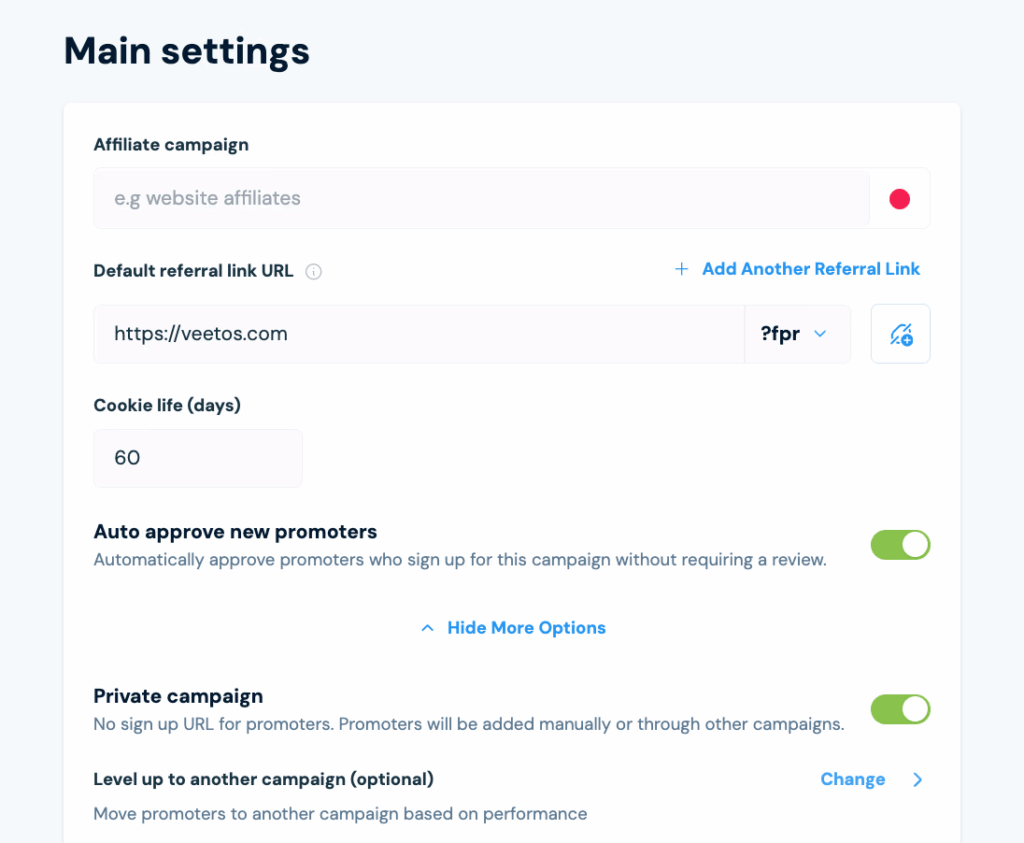
FirstPromoter offers three campaign types, and your choice determines how partners join:
- Default: Features a public signup link where anyone can apply.
- Simple: Uses an invite link only. Affiliates still register themselves, but only through a unique link you share; ideal when you want to keep access controlled while reaching out directly.
- Private: Skips public signup altogether. You add every partner manually, making it the perfect fit for high-touch influencer deals or curated partnerships negotiated one-on-one.
Because these campaign types can run in parallel, you can easily host a public program alongside a private influencer campaign.
Step 2: Turn on the public application page
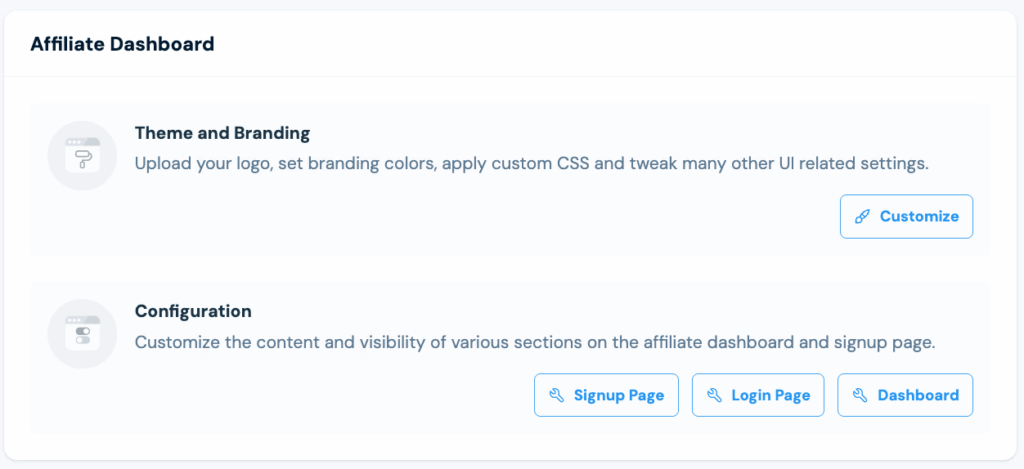
For a default campaign, enable the public signup and application page so affiliates can apply themselves instead of waiting for a manual invite. It can live on your own branded partner portal, so it looks like an extension of your product rather than a generic third-party form: a detail that matters when pitching serious partners. This is the page every recruitment channel above should ultimately point to.
Step 3: Add custom signup fields to collect vetting info
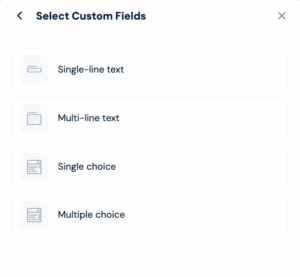
Add custom signup fields to capture exactly what you need up front: website URL, main promotion channel, audience size and how they plan to promote you. These fields are what feed the checks from the section above, giving you real information to evaluate instead of just a name and an email address to work with. You can configure exactly which fields show up, add required fields for the channels you care about most and adjust them per campaign under affiliate program features.
Step 4: Review applications in the approval queue
Applications land in an approval queue instead of getting auto-accepted, so nobody starts promoting your program before someone has actually looked at their answers. This is where you run the quick check from the vetting section above: look at the trend, not a single snapshot, check whether a cross-platform presence makes sense for the size of the channel and confirm engagement looks proportional to audience size rather than suspiciously uniform. A few minutes per application here saves far more time later, once you’re chasing down commissions paid to someone who was never a real promoter.
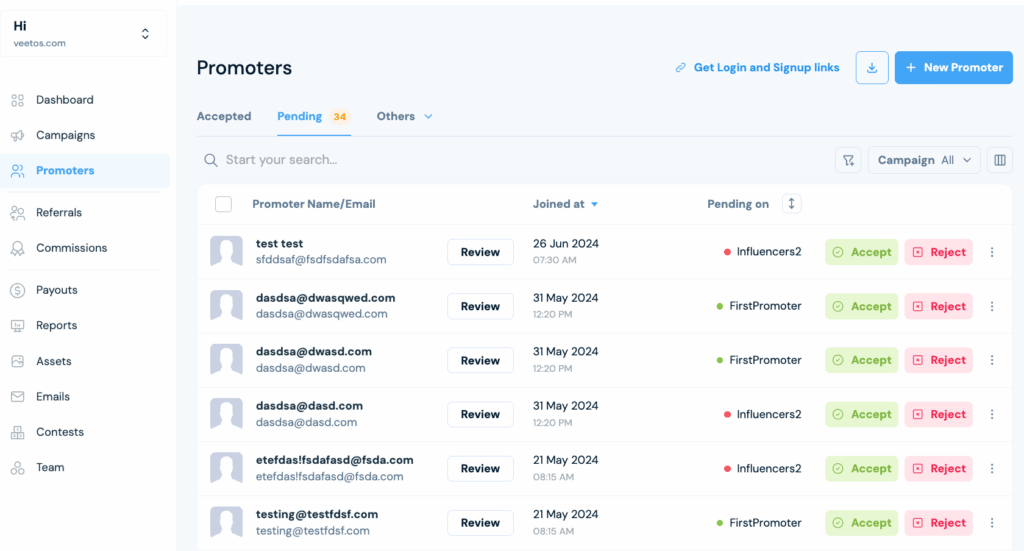
Step 5: Let built-in fraud protection flag the obvious cases
Self-referrals and ad-traffic fraud get flagged automatically before a commission ever fires, with suspicious cases held in a review queue and a reason recorded against them so you’re not guessing why something was flagged. This runs separately from the manual application review above, catching issues that only show up once an affiliate is already active and generating clicks. It’s the affiliate tracking software layer working in the background so obvious fraud doesn’t need a human watching in real time to catch it.
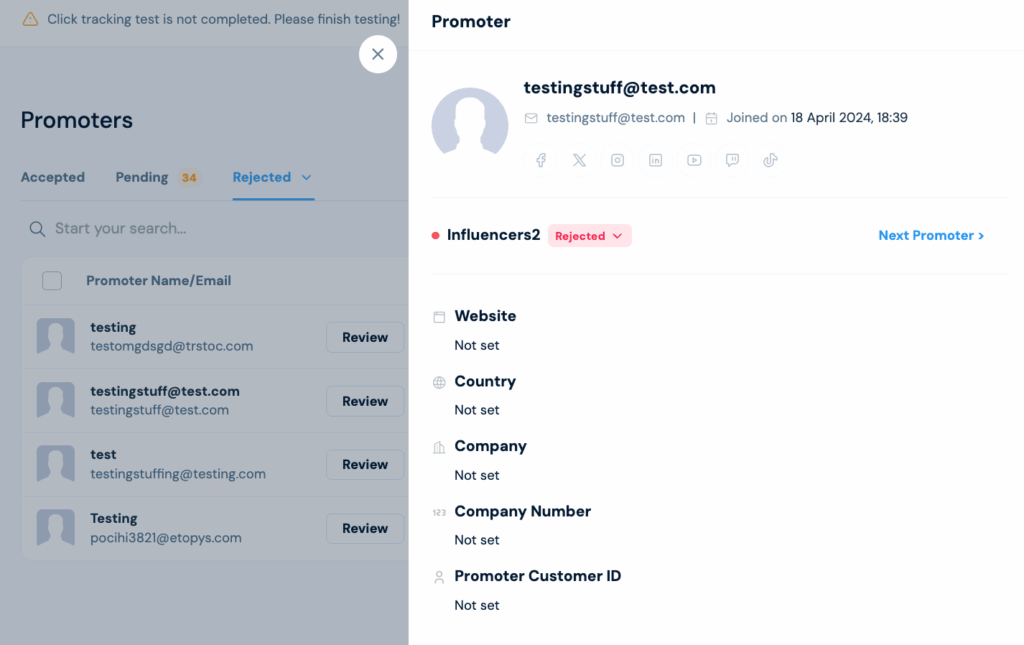
Step 6: Approve, reject or request more info
Every application gets one of three outcomes: approve, reject, or ask for more detail before deciding. Once approved, the affiliate gets their tracking link and any coupon code automatically, no manual setup required on your end.
One honest boundary worth stating plainly: FirstPromoter doesn’t find affiliates for you. There’s no marketplace or discovery tool baked into the product. What it does is take the applications you generate through the strategies above and turn them into a filtered, fraud-checked pipeline instead of an unmanaged inbox full of unknowns.
What affiliates look for in YOUR program
Recruitment isn’t one-directional. The affiliates worth having are comparing your program against others before they say yes, the same way you’re evaluating them.
A few things tip that decision in your favor:
- Commission that’s actually competitive. While rates vary across niches, offering a one-time payout or anything below 20% immediately puts you under market. According to FirstPromoter data, the median recurring commission is 25% (with most falling between 20% and 30%), and 84% of cash-paying programs offer recurring payouts in some form. Partners also expect fair terms: our default 60-day cookie window is the standard for 64% of programs, and 95% set no minimum payout threshold. Don’t put friction between affiliates and their money; benchmark against real category standards, not arbitrary numbers.
- Recurring commission over a one-time payout, especially for subscription products where the affiliate keeps earning as the customer stays subscribed.
- A cookie window long enough to credit the affiliate for a sale that doesn’t happen on the first click.
- Ready-to-use marketing assets, so the affiliate isn’t starting from a blank page every time they want to promote you.
- Payouts that show up reliably and on time. Nothing kills a partnership faster than a payout that’s late or wrong.
- A clean, welcoming affiliate dashboard where they can see their links, clicks and earnings without digging.
FirstPromoter supports flexible commission models, a library of marketing assets and reliable payouts through Stripe Payouts, PayPal and Wise. None of that replaces the recruitment work above, but it’s what makes an accepted affiliate actually want to stay.
Conclusion: build a repeatable recruitment pipeline
Recruiting affiliates comes down to five moves: know what a good affiliate actually looks like, source from your highest-converting channels first, pitch with a message built around the affiliate rather than your own product, vet before you approve and give the people you accept a program worth staying in.
Most programs stall for the same handful of reasons: setting the program up once and never promoting it again, sending the same unpersonalized message to everyone, accepting every applicant with no vetting at all and trying to compete purely on commission rate instead of the full package. Avoid those four and you’re already ahead of most competitors in your category.
If you’re ready to put the vetting and pipeline pieces in place, start a free trial and see how the approval queue and built-in fraud protection turn applications into a filtered pipeline.
FAQ: recruiting affiliates
How do I recruit my first affiliates with no budget?
Start with your existing happy customers and your own site and email traffic. These are free, they convert best because trust already exists and they don’t require any paid outreach to activate, so they’re the right place to spend your first hours before touching ads or outreach tools.
How do I recruit affiliates from my competitors?
Identify competitors that run affiliate programs, then search “[competitor] review” to find the creators and sites already ranking for that content. Pitch them a clear advantage over what they currently get, whether that’s a higher or recurring commission or better assets, and personalize every message you send.
How do I know if an affiliate is legitimate?
Check performance over time rather than a single snapshot. Real audiences grow unevenly, while manufactured ones tend to look too smooth and consistent. Cross-check with third-party analytics tools where available, and for newsletters or podcasts, ask for click data and references instead of taking reach numbers at face value.
Should I let anyone join my affiliate program?
No. Use a public application with vetting fields and an approval queue so you can filter for fit and catch obvious fraud signals before any commission fires, rather than accepting everyone and cleaning up problems later.
What’s the difference between recruiting affiliates and influencers?
Affiliates typically apply themselves through a public form and promote for commission at scale, often dozens or hundreds active at once. Influencer partnerships are usually negotiated one on one and invite-only, with no self-serve signup. The recruitment approach, and the ongoing management, look different for each.
How many affiliates should I recruit?
Quality matters more than headcount. The median program generates just 1.6 referrals and 0.4 new paying customers per month (FirstPromoter data, as of July 2026), so a handful of well-matched, active affiliates will outperform hundreds of inactive signups. Focus on fit first, then support the people you approve.

In this article
Newsletter