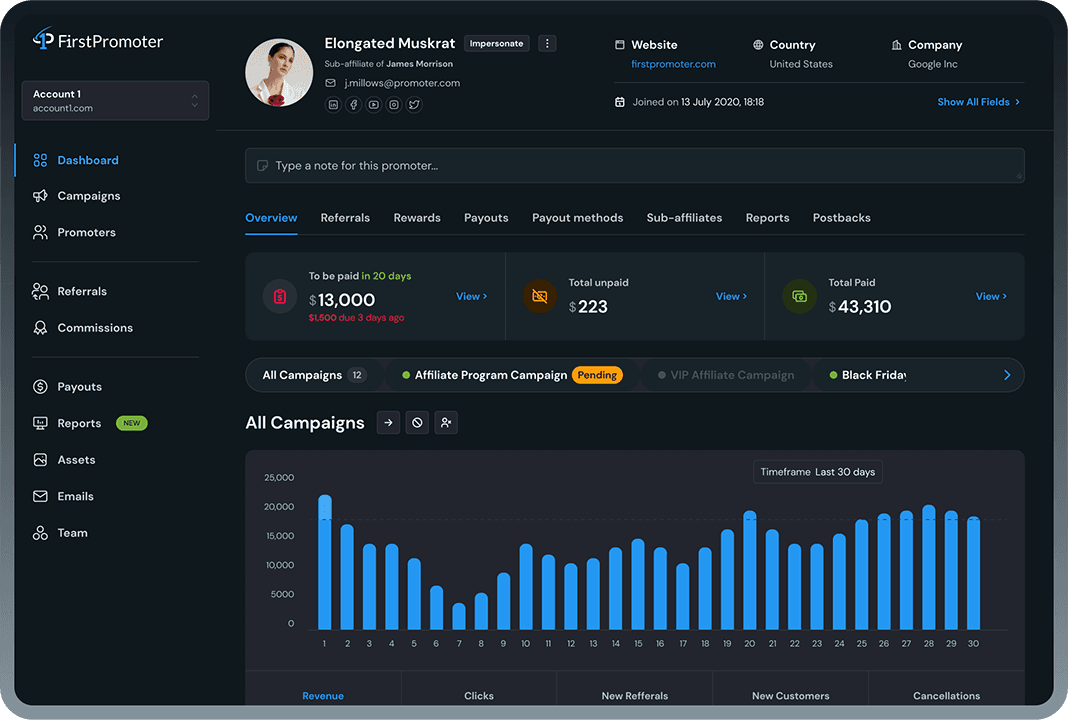
In a typical affiliate program, most approved partners have never sent a single click. They signed up and stopped there. So before you touch commission rates or reopen recruitment, there’s a more useful question to ask: out of the four things that actually drive affiliate revenue, which one is broken?
Those four are active partners, clicks per active partner, your site’s conversion rate on that traffic, and what a referred customer is worth over time. Multiply them together and you get your affiliate revenue. Weaken any one and the total falls, and no amount of polish on the other three will cover for it. Few operators ever calculate the four, which is exactly why the usual advice: raise the rate, email the list, sign up more partners, so often does nothing.
This guide is built for the person running the program: find your weak lever first, then use everything below to fix it.
Key Takeaways
- Affiliate revenue breaks down into four levers: active partners, clicks per active partner, conversion rate and revenue per referred customer. Your weakest one caps everything else.
- Revenue concentrates hard. A handful of partners typically drive most of what a program earns.
- A quiet roster is more often a sign of bad approvals than a weak offer.
- Recurring and tiered commission structures do more for revenue than a flat rate bump ever will.
- Partners cited inside AI answers influence purchases that last-click reporting simply can’t see.
Diagnose before you touch anything
You can run every check below in our affiliate tracking software, and the same math applies wherever you run it. That’s also why every search for how to increase affiliate marketing sales turns up the same recycled tips to increase affiliate sales: nobody’s located the leak first. Work through the four levers in order below and stop at the first one that’s weak. That’s the one to fix.
1. Are your partners actually promoting?
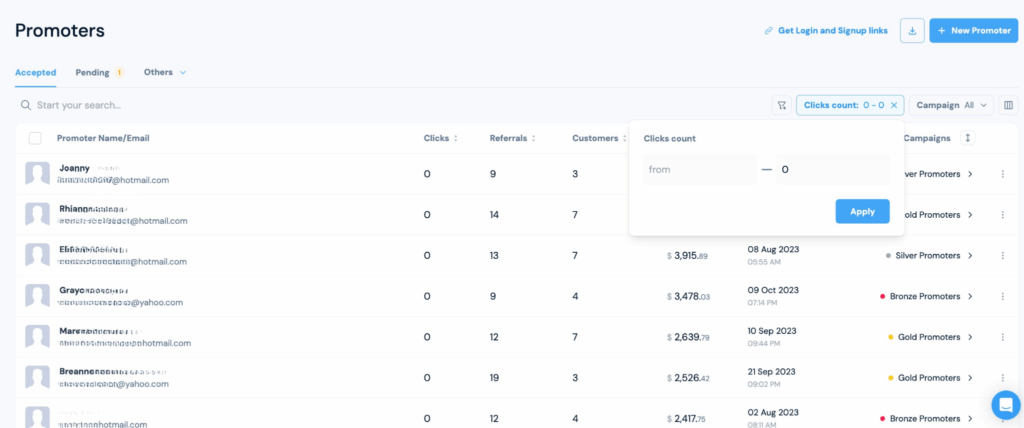
Calculate your activation rate: partners with at least one click in the last 30 days, divided by your total approved roster. Total signups, meanwhile, gets quoted in every update meeting but tells you almost nothing, because a program can have hundreds of approved partners and a single-digit percentage of them doing anything at all.
This is where the recruitment reflex backfires. Adding twenty new partners to a program where 90% of the existing roster has never clicked doesn’t move revenue. It just grows the denominator while the same small group keeps carrying the load.
It helps to know why accounts go quiet in the first place. Publishers typically sign up during a burst of intent, then stall the moment they hit friction: a setup step they didn’t expect, no promotional assets to work from, or campaign goals that were never quite clear. That’s a different problem than losing interest, and it points to a different fix.
Our partner list filters by click activity over a date range, which turns this into a two-minute check instead of a research project. Set the range to 30 days, filter for zero clicks, divide. The number has been sitting there the whole time.
2. How much of your traffic comes from how few people?
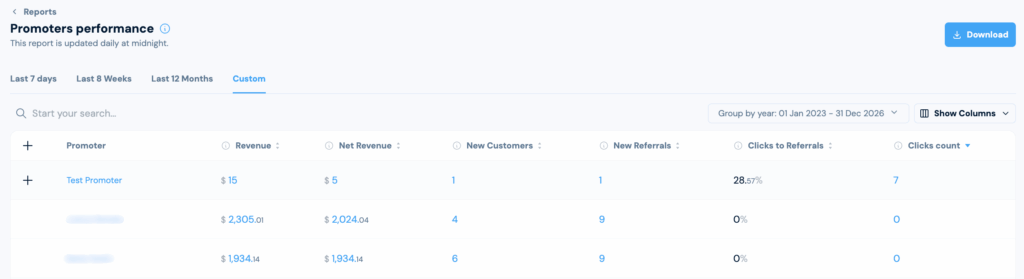
The metric is clicks per active partner, and more importantly, the spread across your roster rather than the average alone. Expect concentration. A small cluster of partners will usually account for most of your traffic, with a long tail contributing next to nothing.
That shape tells you where to spend your time. If a few partners send almost everything, growth comes from making those few bigger, not from chasing the other 200. If nobody sends much of anything, the partners you approved don’t have the audience their application implied.
In our partner performance report, sorting by clicks surfaces this instantly. A program with 500 approved partners might depend entirely on three publishers ranking for the terms that matter, and that’s good to know before one of them stops updating their site.
3. Does that traffic convert?
Compare your affiliate conversion rate against your normal paid or organic baseline. This is the stage that answers how to increase affiliate conversions specifically, and it’s a different diagnosis than either of the two above.
If affiliate traffic converts noticeably worse than your baseline, the problem sits on your side: the landing page, the offer, the mismatch between what the click promised and what it delivered. If it converts in line with or better than your baseline, the traffic is fine and the ceiling is back in Stage 2.
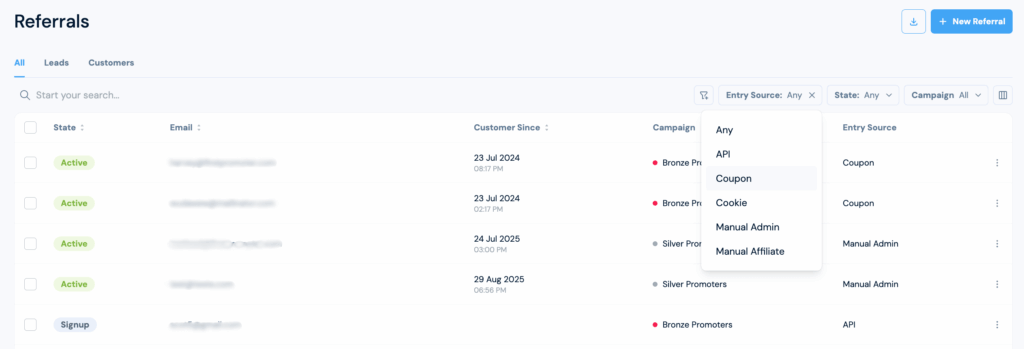
Before you conclude anything, check your attribution setup. First-click versus last-click and a short cookie window both hide conversions that already happened, and the gap is often bigger than people expect: a 7-day window on a purchase your buyers typically take 30 to 90 days to decide on will quietly strip credit from the partner who started that journey. Our referral records carry entry source and referrer URL and can be filtered by placement, so you can see exactly which links are converting instead of reading one blended average.
4. What is a referred customer actually worth?
Look at revenue per referred customer and how long they stick around, checked against your average. Subscription businesses have the most to gain from this check.
If referred customers churn faster than average, that partner is sending you the wrong audience, and no commission adjustment fixes that. If they’re worth more than average, you’re underpaying relative to what that traffic generates, and you can afford to pay more. A rate that looks generous on someone’s first invoice can be stingy once you look at the full subscription lifetime.
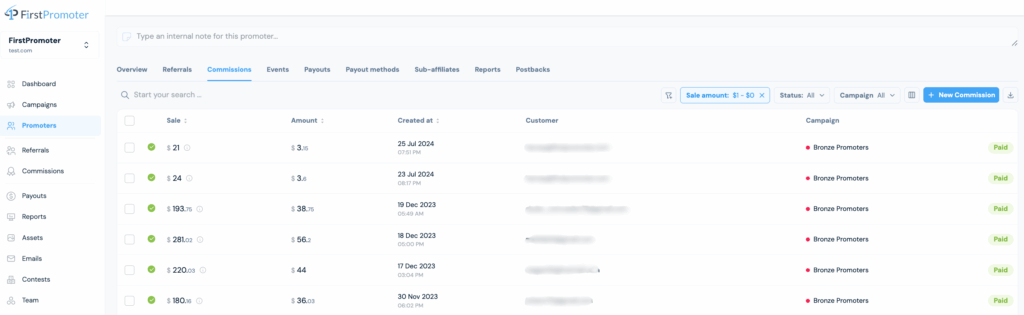
Our commissions fire on real billing events, not on signup, so your records reflect what a customer paid over time. Export to CSV or JSON to run the lifetime math in a spreadsheet.
Fix the lever that’s weak
Match the fix below to whichever check came back weak, and skip straight there. This is the practical side of affiliate program management: fixing the specific thing that’s broken instead of running every playbook at once.
If it’s activation: clean the roster, then wake it up
Before you spend a single email on re-engagement, check who’s on your list. Building a convincing fake partner has gotten remarkably cheap. Tautvydas Vasiliauskas, our Head of Marketing, covers this in our ebook AI and the Affiliate Publisher Landscape: bought subscribers, AI-generated sites and purchased engagement all clear a casual first look without much effort. The tell is variation. Real audiences produce results that swing over time; manufactured ones stay suspiciously flat.
Pull that segment out before you measure activation, because emailing accounts that were never real just wastes time and skews your numbers further. Full vetting deserves its own read, and our guide to affiliate fraud covers it.
For everyone left, segment by behavior before writing anything: partners who never sent a click, and partners who tried once and stopped. The first group usually just doesn’t know what to say or post, so one specific asset paired with one specific angle beats a link to a folder every time. Send the second group a direct message asking what happened. Sometimes the honest answer is that their one attempt didn’t convert, and they quietly wrote off the program instead of telling you. Other times it’s something more mundane: a broken tracking link, a shifted content calendar, a promo code that stopped working. A two-line message is often all it takes to get them posting again.
A monthly newsletter to the whole list is the weakest version of this. Automated sequences triggered on signup, or on a stretch of inactivity, scale without you writing individual emails every week.
If it’s traffic concentration: invest where revenue already lives
Revenue concentrates whether you plan for it or not, which makes this the highest-return fix on the list. Helping a partner who already sends twenty sales a month reach forty beats trying to squeeze single clicks out of two hundred dormant accounts.
A few things worth trying with your top performers: ask what content is converting for them and help them make more of it, give them early access to launches before anyone else, co-create a comparison piece built for their specific audience, or offer a custom code or a higher rate as a direct thank-you. Sometimes the simplest move is a call asking what would make it easier for them to send more.
Contests and leaderboards work as a short, time-boxed push around a launch. They’re not a substitute for the kind of ongoing attention your best partners respond to.
If it’s conversion: fix what happens after the click
Send affiliate traffic to a page that matches the content it came from. Someone who just read a detailed comparison lands harder on a page that continues that conversation than on a generic homepage. Keep the offer identical to what the partner promised; any mismatch reads as bait and switch even when it’s accidental.
Underneath that, handle the attribution hygiene: cookie window length, first-click versus last-click, and coupon codes for the placements where a trackable link doesn’t survive, like podcasts or video descriptions. A short cookie window on a considered purchase kills conversions that would otherwise be credited correctly, because plenty of buyers don’t finish on the same visit they started.
Unattributed conversions look exactly like a conversion problem from the outside. Fix the tracking before you conclude the traffic is bad.
If it’s customer value: make the commission worth promoting
Work out what a referred customer is worth across their full subscription life, then decide what share you can afford to pay, instead of copying a competitor’s headline rate off their affiliate page.
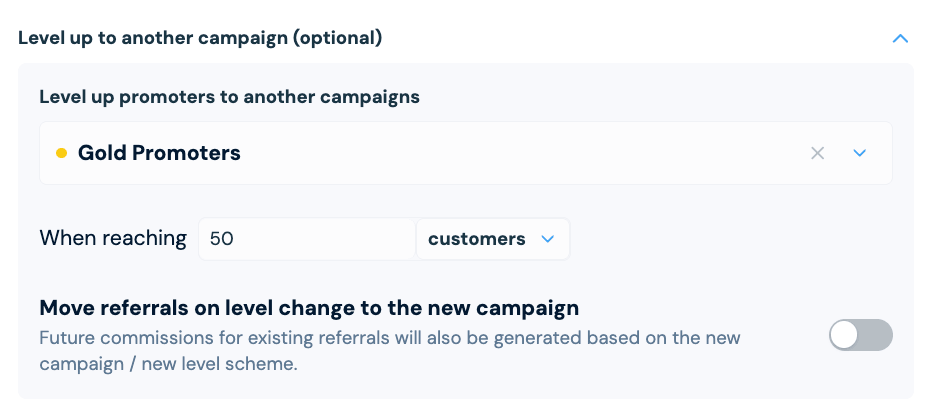
Recurring commission recruits and retains stronger partners in subscription businesses, because a partner’s income keeps growing alongside the customer’s, which lines up incentives on both sides. Tiers are worth adding on top: a standard rate to start, a higher rate for proven performers and a threshold based on active paying customers, not raw signups, that promotes a partner automatically once they cross it. Decide up front whether existing referrals move up with the partner or only new ones do; either choice has a real cost, so make it deliberately.
Keep the three commission types distinct when you design this: tiers escalate a partner’s own rate as their volume grows, performance bonuses are one-off milestone payments, and sub-affiliate commissions reward a partner for bringing in other partners. Blending them tends to create confusion nobody notices until a partner asks why their check looks wrong.
Payout reliability matters just as much as the rate itself. Late or inconsistent payouts push producing partners toward whoever pays on time, and partners talk to each other about who that is. We run payouts through Stripe, with rate and tier structures configurable under features.
Recruit last, not first
Adding partners is the reflex response to flat affiliate sales, and it’s usually the wrong first move. A program converting new signups at the same low rate as its existing roster doesn’t fix that by getting bigger; it just multiplies the same problem. Once activation, traffic and conversion are all healthy, new partners have something to convert into.
Turning happy existing customers into partners is one of the highest-converting recruitment tactics there is. Keep the line clear between a customer who casually refers one friend, that’s a referral, and a partner promoting to their own audience for commission, that’s an affiliate. They need different programs. We don’t sourcze or pitch partners for you; that side stays the operator’s job. For the mechanics, see our guides on how to recruit affiliates and referral programs.
The sales your reporting can’t see
A growing share of buying decisions now form inside AI Overviews and conversational answer engines, where a partner’s content is the source being cited and the person reading it may never click a trackable link at all.
We dig into this in our ebook, citing SparkToro’s analysis of Similarweb clickstream data: the share of Google searches ending without any click to an external site climbed from roughly 60% in 2024 to roughly 68% in early 2026.
Tautvydas also ran research specifically on how people weigh AI-generated recommendations against expert review sites for considered purchases, and found trust in the two came out about equal. A partner cited for a query that matters to your category is doing consideration-stage work, right where someone is deciding what to buy, even though a last-click report has no way to register it.
The practical consequence is that a program judging every partner on last-click data alone will keep rating that partner a poor performer and may eventually cut them, purely because the report can’t see what they’re doing.
Track which of your partners show up as cited sources for the queries that matter to you, weight the clicks you can see from them a little more generously and consider placement fees, content co-investment, or a contest tied to ranking for a high-value query. None of this is proper attribution, and it isn’t trying to be. It’s a way to keep paying a partner for impact your tracking cannot capture.
Measure first, then pull one lever
Check activation, then clicks per active partner, then conversion, then revenue per referred customer, in that order, and fix whichever one is weakest. Add partners only once the first three are healthy enough for new signups to have something worth converting into.
The common mistakes trace back to skipping that order: raising commission before confirming anyone is promoting, emailing a roster padded with partners who were never real, judging every partner on last-click data alone, or recruiting to paper over what’s really an activation problem.
Ready to see where your own program is leaking? That order, applied consistently, is how to get more affiliate sales without another round of guesswork. Start a free trial and run the numbers straight from your reports.
FAQ: increasing affiliate sales
Why is my affiliate program not generating sales?
Usually it’s activation, not lack of interest. Work out what share of your approved partners have sent even one click in the past 30 days before touching commission rates or reopening recruitment.
What is the 80/20 rule in affiliate marketing?
A small share of partners typically produces most of the revenue, and the rest cluster close to noise. Supporting your handful of real producers usually beats trying to revive a long-dormant list.
How do I motivate inactive affiliates?
Segment by behavior first: never promoted versus tried once and stopped. A specific asset paired with a specific angle beats a generic link to your resource library, and a direct message asking what happened works better than another newsletter.
Should I raise my commission rate to increase affiliate sales?
Not before checking whether anyone is promoting. A higher rate on the same small volume just costs you more without moving the number you’re trying to move. Work out lifetime value first.
How do I increase affiliate conversion rates?
Match the landing page to the content that sent the click, keep the offer identical to what the partner promised and check your cookie window and attribution setup before deciding the traffic itself is the problem.

In this article
Newsletter